

By Anson Bouchard
In certain fields of research there is often work both by academic institutions and other institutions, such as government and corporate think tanks. As research in the field of artificial intelligence (AI) is growing rapidly in recent years, this article examines the evolution of where the top work in AI is conducted.
I use data from OpenAlex, an open database that catalogs published research papers, to analyze the papers published within the field of AI from the 1950s until now. I categorize papers according to the affiliation of their authors, resulting in four types: solely academic papers, solely corporate papers, “hybrid” papers with at least one author from an academic and a corporate institution, or “other” papers that include papers published by government, nonprofit, healthcare, or other institutions. To examine the trend of paper affiliations, the first figure illustrates the proportion of primary affiliation for papers with relevant data from 1950 onwards.
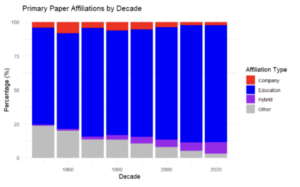
Figure 1: AI Papers by Primary Affiliation
As a result of the explosion of corporate and academic interest in the field, the other category has starkly declined, going from 24% of AI papers in 1950 to just 3% now. At the same time, the percentage of education affiliated papers has increased slightly over time, from around 72% to 86%. The percentage of company affiliation has actually decreased from around 4% in the 1950s to 2% now. The category with the largest relative increase is hybrid, going from around 1% in the 1950s to 8% now. At the same time that these proportions have shifted, the total number of papers published has increased tremendously over the past few decades, going from 1,246 papers in the 1950s to 267,142 papers in the 2010s. To quantify the importance of published work, the second figure below shows the median citation counts, a commonly used proxy for paper impact.
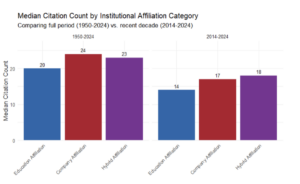
Figure 2: Median Citation Count by Institutional Affiliation
Throughout, both company and hybrid affiliated papers had higher median citation counts. Whilst it seems that company affiliated papers have had the most impact when looking at the entire time period from 1950 until 2024, hybrid affiliated papers have increased in impact and now slightly outmatch company affiliated papers within the last 10 years. This shows a clear trend of increased value being generated by company and academic collaborations. Alongside the previous trend of the increased proportion of hybrid papers, this finding points towards greater importance for hybrid work moving forward.
To further investigate this trend, the following figures focus on the top academic and company publishers of this type of AI paper. The top academic institutions affiliated with hybrid papers are shown in the following figure and include top universities for computer science from mainly the US and China.
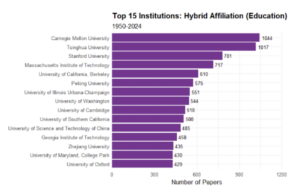
Figure 3: Top 15 Hybrid Affiliated Academic Institutions
For hybrid papers, the companies that are affiliated with hybrid papers are shown below, and also include many of the top technology companies, such as Microsoft, Google, and IBM.
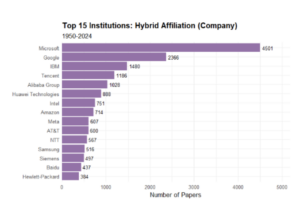
Figure 4: Top 15 Hybrid Affiliated Companies
The prior two figures show generally which institutions publish hybrid AI papers, however, they do not show the specific collaborations between companies and academic institutions, which is what the following figure does.
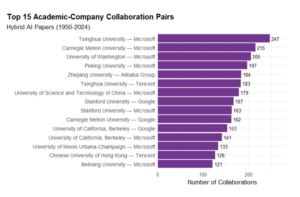
Figure 5: Top 15 Academic-Company Collaboration Pairs
As can be seen, the top tech companies like Google and Microsoft, as well as the top universities for computer science in the US and China dominate this list. It is interesting that not all the companies and universities that were represented on the prior two figures are seen here, indicating that there are specific pairings of cross-collaboration which produce an outsized number of papers together. More specifically, most of the collaborations appear to be between either Microsoft or Google and a leading university. As these are the top two company publishers of hybrid papers, as shown in Figure 4, this is not surprising. Overall, there is a trend of hybrid papers gaining in importance, based on the median citation counts, as well as in terms of number of collaborations.
The rise of hybrid papers suggests that academics, who typically have lesser access to large datasets and greater computing power, may be gaining access to resources of the top tech companies needed to address questions of academic interest in AI1. By enabling access for academic researchers, corporations may be allowing study of questions of public interest. One example of this can be seen in the 2018 paper titled “Gender Shades: Intersectional Accuracy Disparities in Commercial Gender Classification” published by Joy Buolamwini, an academic then at MIT, and Timnit Gebru, an employee at Microsoft at the time2. This paper outlines gender and racial discrimination found in facial analysis algorithms. Such studies, which constitute an important check on AI algorithms, seem more likely when authors from outside the corporate world are included. Given the wide and ever widening implications of AI algorithms — like in credit checks, medical developments, hiring decisions, and scientific research — such an additional check is welcome.
References:
OpenAlex, https://openalex.org/.
Buolamwini, J. & Gebru, T. (2018). Gender Shades: Intersectional Accuracy Disparities in Commercial Gender Classification. Proceedings of Machine Learning Research, 81, 1–15. MIT
Ahmed, N., Wahed, M., & Thompson, N. (2023). The growing influence of industry in AI research: Industry is gaining control over the technology’s future. Science, 379(6635). 10.1126/science.ade2420.
1 https://ide.mit.edu/wp-content/uploads/2023/03/0303PolicyForum_Ai_FF-2.pdf
2 https://proceedings.mlr.press/v81/buolamwini18a/buolamwini18a.pdf
 |
Article by Anson Bouchard ’26 Data Journalist |
|

